
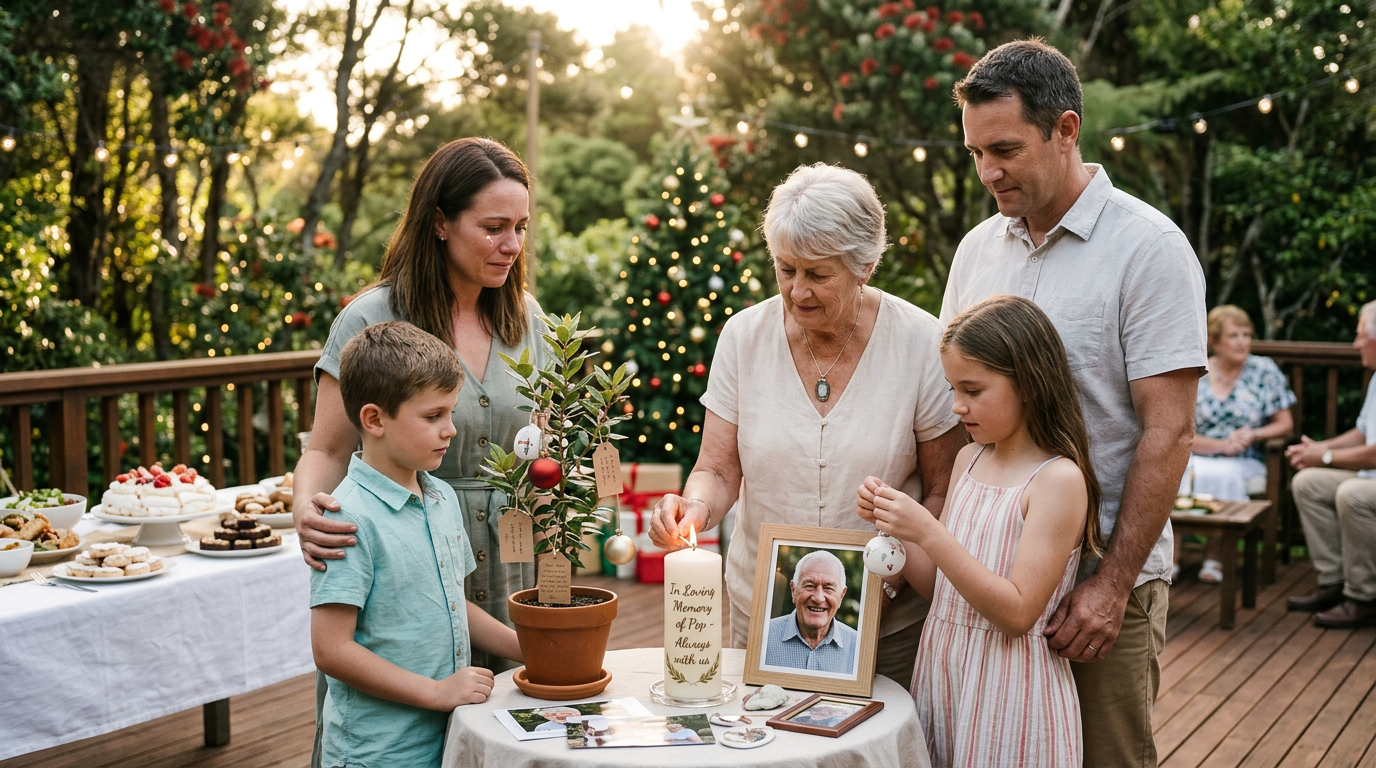
Anniversaries, birthdays, and other significant dates can be some of the hardest moments in grief. They arrive on the calendar with a kind of certainty that catches people off guard — even when you know they are coming. There is no right way to get through these dates. But there are some things that may help, and it can be useful to think about them before they arrive.
Why special dates feel so hard
Dates like birthdays, anniversaries, Christmas, Mother’s Day, and Father’s Day carry a particular weight in grief because they are tied to rituals and expectations. They are days that were supposed to be shared. The absence of the person who died is not abstract on these days — it is specific, visible, and shaped like the space they used to fill.
Many people find that the lead-up to a significant date is harder than the day itself. The anticipation — the dread of what it will feel like — can begin weeks in advance. Others find they move through the day more easily than expected, and then feel guilty for that. Both experiences are valid. There is no correct way to feel on a hard date.
Planning ahead when you can
It can help to think ahead about significant dates — not to dread them, but to give yourself some agency over how you move through them. Some questions to sit with:
- Do you want to spend this day with other people, or would you prefer time alone?
- Is there a small ritual you could create to mark the day — visiting a place they loved, lighting a candle, looking through photos, cooking something they enjoyed?
- Is there someone you could let know in advance that this date is hard, so they can check in on you?
- Are there things you would like to avoid on the day — social media, certain gatherings, environments that feel like too much?
- Is there something simple and kind you could do for yourself?
You do not need to have a plan. But having even a very simple one can help the day feel slightly less like something happening to you and slightly more like something you can move through on your own terms.
Creating new ways to mark the day
Some people find comfort in creating a small ritual to mark the anniversary of a death or a birthday. These are not attempts to recreate what was — they are new ways of holding the person present, of acknowledging the day, and of giving the grief somewhere intentional to land.
- Visiting a place they loved
- Cooking their favourite meal
- Planting something in the garden in their name
- Writing them a letter
- Gathering with whānau or close friends to share memories
- Donating to a cause they cared about
- Making something — a photo album, a piece of art, a playlist of songs they loved
- Doing something they always wanted to do with you but never got to
There is no pressure to do any of these things. If having a small ritual helps the day feel more meaningful than simply painful, it is worth exploring.
When whānau and friends grieve differently
One of the challenges of significant dates is that different people in the same family may want to mark them in very different ways. One person may want to gather and talk about memories. Another may need to be alone. One may want to mark the day formally; another may want to get through it as quietly as possible. Neither approach is wrong.
If possible, have the conversation ahead of time about what feels right to each person. Flexibility and patience are more useful here than consensus. It is okay for different family members to mark the day differently, and to come together in the parts where that feels comfortable.
Matariki — a time of remembrance in Aotearoa
Matariki, the Māori New Year marked by the rising of the Matariki star cluster, is a public holiday in Aotearoa and a time of remembrance for those who have died. In te ao Māori, Matariki is understood as a time to acknowledge the dead, to reflect, and to prepare for renewal. The stars of Matariki are associated with different aspects of the world — and Matariki herself is associated with health, wellbeing, and the environment.
For many whānau, Matariki offers a culturally grounded occasion to grieve together, to remember those who have died, and to feel the grief held within a wider communal and spiritual framework. If Matariki is meaningful to you or your whānau, it may be one of the most natural and supported occasions of the year for that remembrance.
Surviving the first year of dates
Many people find the first year of significant dates the hardest — the first birthday without them, the first Christmas, the first anniversary of the death. After that, the dates may feel different. Not easier, necessarily, but different. The rawness often changes shape over time. Some people describe subsequent anniversaries as more bittersweet — still painful but also carrying more memory, more gratitude, more of the fullness of who the person was.
Be gentle with yourself in the first year. You are doing something very hard. Getting through each first date is a real thing, even if no one else marks it as such.
If a date arrives and you are struggling
Some things that may help on a hard day:
- Call or text 1737 — free, 24/7, trained counsellors
- Reach out to one person who understands — even a brief message
- Give yourself permission to feel whatever comes
- Lower your expectations of yourself for the day significantly — getting through is enough
- Do one small, kind thing for yourself
- If you are alone and finding it very hard, consider joining the Grief Support NZ Facebook group — others there will understand
The day after
The day after a hard date can feel strangely flat or deeply depleted. The weight of anticipating and getting through it can leave a person exhausted. There may also be a complex mix of relief that it is over and grief at the passing of a day that was, despite everything, about someone you love.
Rest. Be gentle with yourself. The fact that you got through it matters, even if it did not feel okay.
Support available in New Zealand
If you are struggling around a hard date, these services can help:
- 1737 — free call or text, 24/7 including public holidays
- The Grief Centre — 0800 331 333 — bereavement counselling and peer support groups across NZ
- Skylight — 0800 299 100 — grief and trauma support for all ages
- Samaritans NZ — 0800 726 666 — confidential listening, 24/7
- Lifeline Aotearoa — 0800 543 354 — free, 24/7
- Mental Health Foundation NZ — resources on grief and wellbeing
- Find local grief support near you — regional directory for Aotearoa
Related guides
Grief at Christmas and Special Dates →Supporting Someone on Anniversaries and Hard Dates →When Grief Feels Overwhelming →Grief After a Death →Browse all guides →Need support right now?
Free 24/7 support is available across New Zealand.
If this helped you, you’re welcome to share it with someone who may need it.
You can also join the Grief Support NZ Facebook group to connect with others across New Zealand.
Support this free resource
Grief Support NZ is free for anyone who needs it. If you’d like to help cover costs, you can make a small voluntary contribution.
Support Grief Support NZThis article is intended as general support and information only. It is not a replacement for professional advice, counselling, or urgent help. If you feel unsafe, overwhelmed, or at risk, please contact emergency services or a crisis support service immediately.