
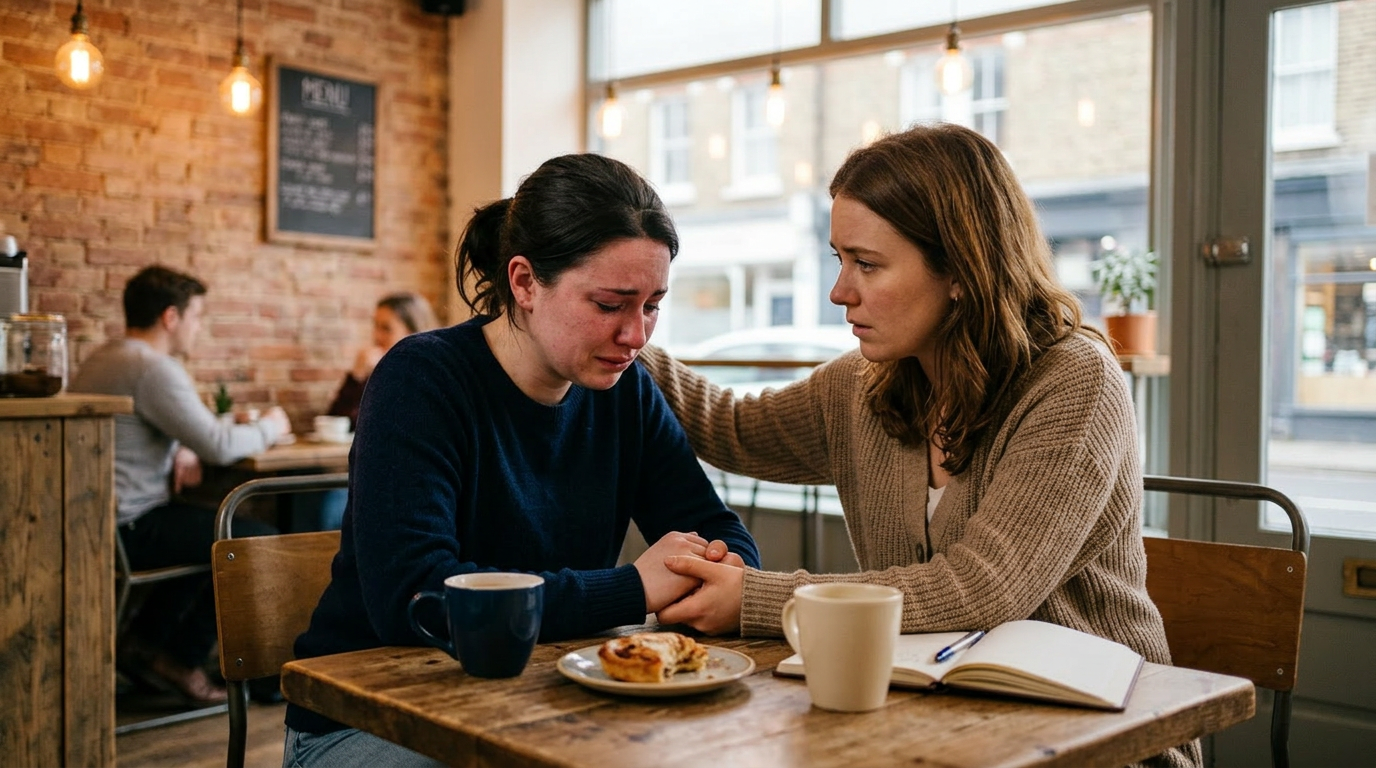
Most people feel unsure about what to say to someone who is grieving. The fear of getting it wrong — of saying something hurtful or making things worse — can be paralysing. And so many people end up saying nothing at all, or avoiding the grieving person altogether.
But silence and distance are often what grieving people find most painful. Showing up — even imperfectly — almost always matters more than having the right words.
Words that genuinely help
There is no perfect script for grief. But some things tend to land well because they are honest, warm, and don’t try to fix what cannot be fixed.
- “I’m so sorry. I’m here with you.”
- “I’ve been thinking about you.”
- “I remember [their name]. They were [something specific and true about them].”
- “I don’t know what to say, but I wanted you to know I care.”
- “You don’t have to reply — I just wanted you to know I’m thinking of you.”
- “Can I bring dinner on Thursday?”
Notice that these are mostly short. They are not trying to explain anything, offer solutions, or make the pain smaller. They are simply saying: I see you, I care, I’m here.
Say their name
One of the most powerful things you can do is say the name of the person who died. Many grieving people are terrified that others will forget, or will stop mentioning their loved one. Saying the name out loud — naturally, warmly — tells them it is safe to remember.
Things that tend not to help
With the best of intentions, people sometimes say things that land badly. These phrases are usually attempts to comfort, but they can feel dismissive or minimising:
- “At least they had a good long life”
- “Everything happens for a reason”
- “They would want you to be happy”
- “I know exactly how you feel”
- “You need to stay strong”
- “It’s time to move on”
None of these come from a bad place. But they tend to close down the conversation rather than open it up. They can leave the grieving person feeling like their pain is being managed rather than acknowledged.
Listening matters more than talking
Often what a grieving person needs most is not words at all — it is someone to sit with them. To listen without trying to fix. To let them talk about the person who died, repeat themselves, cry, or sit in silence.
You do not need to fill the silence. You do not need to redirect the conversation to something easier. Being present is the gift.
Keep checking in
Grief does not end after the funeral. In fact, the weeks and months that follow are often the hardest — when the practical support falls away and the reality of the loss settles in.
A simple message weeks or months later — “I’m thinking of you today” — can mean more than you know.
Read the full guide
For a more detailed guide including more examples, what to do (not just say), and how to support someone over time:
Read: What to Say to Someone Who Is Grieving — the full guide →
You may also find these helpful:
How to help a friend who is grieving →
Get support now →
All grief resources →
Need support right now?
If you or someone you care about needs help, please reach out.
If this helped you, you’re welcome to share it with someone who may need it.
You can also join the Grief Support NZ Facebook group to connect with others across New Zealand.
Grief Support NZ is free to use. If you’d like to support the time and care that goes into building these resources, you can buy me a coffee.
Support Grief Support NZThis article is intended as general support and information only. It is not a replacement for professional advice, counselling, or urgent help. If you feel unsafe, overwhelmed, or at risk, please contact emergency services or a crisis support service immediately.