
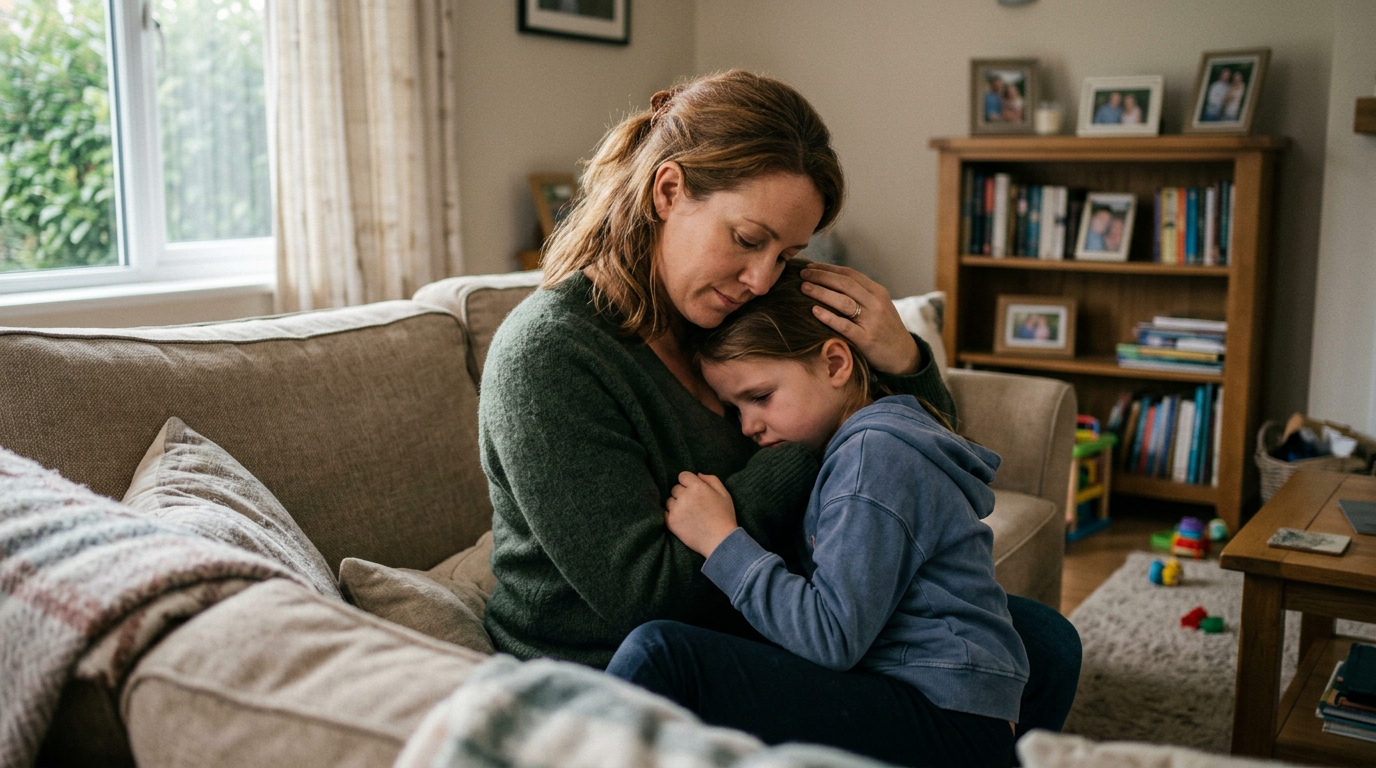
Children grieve. They may grieve differently to adults, and they may not have the words for what they are feeling — but the loss is real, and it matters. When a child in your life is grieving, you don’t need to have all the answers. You just need to be willing to be present with them.
This article offers a starting point for supporting a grieving child. Every child is different, and every loss is different — so take what is helpful and leave what doesn’t fit your situation.
Children understand more than we think
One of the most common instincts when a child loses someone is to protect them from the full reality of what has happened. This is understandable. But children often pick up much more than adults realise — and if they are not given honest, age-appropriate information, they may fill the gap with their imagination, which can sometimes be worse than the truth.
It can help to use clear, honest language. Rather than saying someone “went to sleep” or “passed away,” it is generally better to say they “died.” This may feel hard — but it helps children understand what has happened and that it is permanent.
How children’s grief may look different
Children do not always grieve in sustained, visible ways. You might notice:
- Asking matter-of-fact questions, then going back to playing
- Outbursts of anger or acting out
- Regression — returning to behaviours from when they were younger
- Physical complaints like stomach aches or headaches
- Difficulty concentrating at school
- Wanting to talk about the person who died, sometimes repeatedly
- Long periods of seeming fine, followed by sudden sadness
None of these are wrong. They are all ways children process something enormous.
What helps
- Be honest. Answer questions truthfully and at an age-appropriate level. It is okay to say “I don’t know” or “I feel sad too.”
- Maintain routine where possible. Routine provides a sense of safety when everything else feels uncertain.
- Let them express their feelings. Don’t discourage crying, anger, or other expressions of grief. Let them know all feelings are okay.
- Include them where appropriate. Some children benefit from attending the funeral or tangi, or having a role in a small ceremony. Ask them if they would like to be involved.
- Talk about the person who died. Mention them by name. Share memories. Let the child know it is safe and good to remember.
- Watch for signs they need extra support. If a child’s grief is affecting their ability to function over an extended period, talk to your GP or a school counsellor.
Looking after yourself too
If you are supporting a grieving child, you are likely also grieving yourself. It is okay to let a child see that you are sad — this shows them that grief is a normal and acceptable response to loss. What matters is that they also feel safe and cared for.
Make sure you have your own support too. You cannot support others well from an empty place.
Read our full guide
We have a full guide on this topic with more detailed guidance by age group and specific situations:
Read: Supporting a Grieving Child — the full guide →
You may also find these helpful:
Where to find grief support in New Zealand →
Skylight — grief and trauma support for all ages →
Get support now →
Need support right now?
For you or a child you care about, please reach out.
If this helped you, you’re welcome to share it with someone who may need it.
You can also join the Grief Support NZ Facebook group to connect with others across New Zealand who understand grief in different ways.
Grief Support NZ is free to use. If you’d like to support the time and care that goes into building these resources, you can buy me a coffee.
Support Grief Support NZThis article is intended as general support and information only. It is not a replacement for professional advice, counselling, or urgent help. If you feel unsafe, overwhelmed, or at risk, please contact emergency services or a crisis support service immediately.