
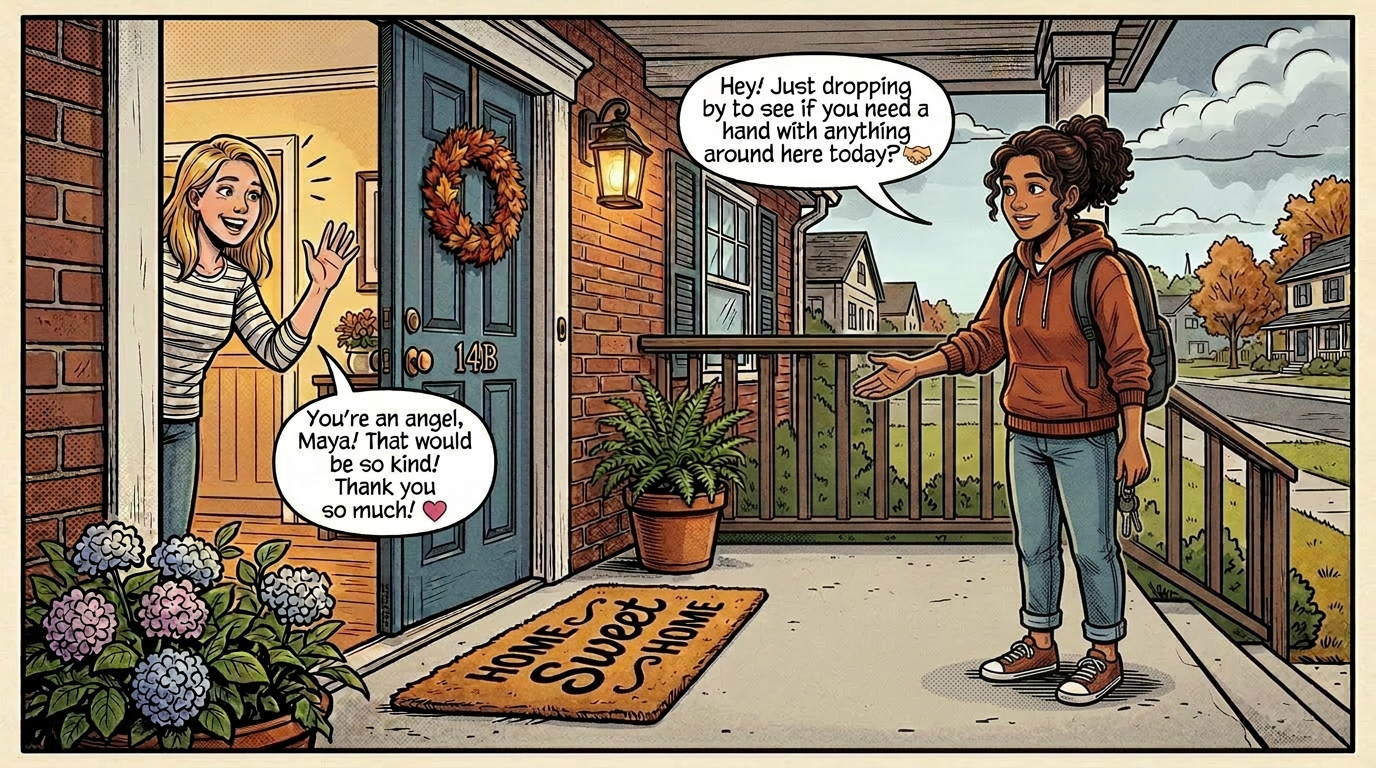
“Let me know if you need anything” is one of the most common things people say to someone grieving. It comes from a genuinely good place. But it puts the work back on the person who is least able to do it. Grieving people often cannot identify what they need, and asking for help can feel impossible when everything already takes enormous effort.
This guide offers practical alternatives — specific, concrete things you can offer or do that take the decision-making burden off the grieving person entirely.
Why vague offers are hard for grieving people
When you are deep in grief, making even small decisions is exhausting. The mental fog is real — concentration and executive function are genuinely impaired. Being asked to identify what you need, formulate it into a request, and then actually ask for it involves several steps that each take energy that simply is not there.
A vague offer also places the social burden on the grieving person: they have to decide if reaching out is appropriate, if they are asking for too much, if this is one of the things the person actually meant when they said “anything.” The result is usually that nothing happens, even when both people genuinely wanted something to.
Specific offers solve this problem. They remove the need to decide. They tell the grieving person exactly what is being offered and ask only for a yes or a no.
Food and groceries
- “I’m making a batch of [meal] tonight — can I drop some off for you?”
- “I’m going to the supermarket on Thursday. Can I grab a few basics for you — bread, milk, fruit?”
- “I’d like to bring dinner on Wednesday. Is 6pm okay, or would another time suit better?”
- “I’ll leave it at the door if you don’t feel like answering — no need to do anything.”
Food is one of the most practical and welcome forms of support in early grief. The logistics of shopping, cooking, and feeding yourself become genuinely overwhelming when you are carrying loss. Having a meal appear without any effort on your part is a real relief.
Practical tasks and admin
- “Can I help you make any phone calls this week? I’m happy to sit with you while you do them, or to make them on your behalf if that helps.”
- “Would it help if I came and sat with you while you go through some of the paperwork?”
- “I can help you write the thank-you notes if that feels too hard right now.”
- “Can I organise the flowers, or liaise with the funeral home on one of the practical things?”
In the early days after a death, there is often an overwhelming amount of admin — notifying agencies, handling paperwork, responding to messages. Having someone offer to sit alongside you, or to take something off the list entirely, can be enormously helpful.
Childcare and family help
- “Can I pick up the kids on Thursday so you have a few hours?”
- “Would it help if they came to ours for a sleepover on Friday night?”
- “I can do the school run next week — just let me know which days work.”
- “Can I take the dog for a walk today?”
For parents, one of the most exhausting parts of grief is continuing to care for children while barely being able to care for yourself. Offering concrete childcare help gives the grieving parent a genuine rest, even briefly.
Company and presence
- “I could come over on Saturday morning — we don’t have to talk. I could just sit with you.”
- “Would you like to go for a walk? We could talk about [name], or we could just walk and not say much.”
- “I could come and watch something with you if you just want company.”
- “Is there anything you’d like to do this week? I’m free on Wednesday and Thursday.”
Presence — just being there, without agenda or expectation — is one of the most valuable things you can offer. Grief can be intensely isolating, and having someone willing to simply sit alongside you without needing anything from you is a real gift.
Checking in by message
- “Thinking of you today. No need to reply.”
- “I’m free Thursday afternoon if you want to talk or need anything. No pressure at all.”
- “I thought of [name] today and wanted to tell you.”
- “It’s been a few weeks and I’m still thinking of you. I know grief doesn’t just stop. I’m here.”
The “no need to reply” addition is important. It removes the obligation to respond, which can itself feel like a task. The grieving person can simply receive the message and know you are thinking of them.
Help in the longer term
Most support is offered in the first few weeks after a death, and then it stops. But grief does not stop. Some of the most meaningful support happens months later, when the world has moved on and the grieving person is carrying their loss more quietly and more alone.
- Send a message on the anniversary of the death.
- Remember the person’s birthday and say their name.
- Check in around Christmas, Mother’s Day, Father’s Day — the hard dates that come around each year.
- Invite them to things, even if you expect they will say no. The invitation matters.
- Keep bringing up the person who died. They have not forgotten. You remembering too means a great deal.
If they say no
Sometimes a grieving person will say no to an offer of help — or simply not respond. This is not always a sign that they do not need anything. It may be that the timing is wrong, that they are in a place where accepting feels impossible, or that they are simply too depleted to respond.
Try again. Try differently. Keep showing up. The consistency of your presence — the fact that you keep offering, keep checking in, keep being there — is often more meaningful than any single act of help.
Support available in New Zealand
If you or someone you are supporting needs more help:
- 1737 — free call or text, 24/7, trained counsellors
- The Grief Centre — 0800 331 333 — bereavement counselling and support groups across NZ
- Skylight — 0800 299 100 — grief and trauma support for all ages
- Lifeline Aotearoa — 0800 543 354 — free, 24/7
- Find local grief support near you — regional directory for Aotearoa
Related guides
How to Support a Grieving Friend →What to Say to Someone Who Is Grieving →How to Check In After the Funeral →Supporting Someone on Anniversaries and Hard Dates →Browse all guides →Need support right now?
Free 24/7 support is available across New Zealand.
If this helped you, you’re welcome to share it with someone who may need it.
You can also join the Grief Support NZ Facebook group to connect with others across New Zealand.
Support this free resource
Grief Support NZ is free for anyone who needs it. If you’d like to help cover website costs, resource updates, and future tools, you can make a small voluntary contribution. There is no pressure at all.
Support Grief Support NZThis article is intended as general support and information only. It is not a replacement for professional advice, counselling, or urgent help. If you feel unsafe, overwhelmed, or at risk, please contact emergency services or a crisis support service immediately.