
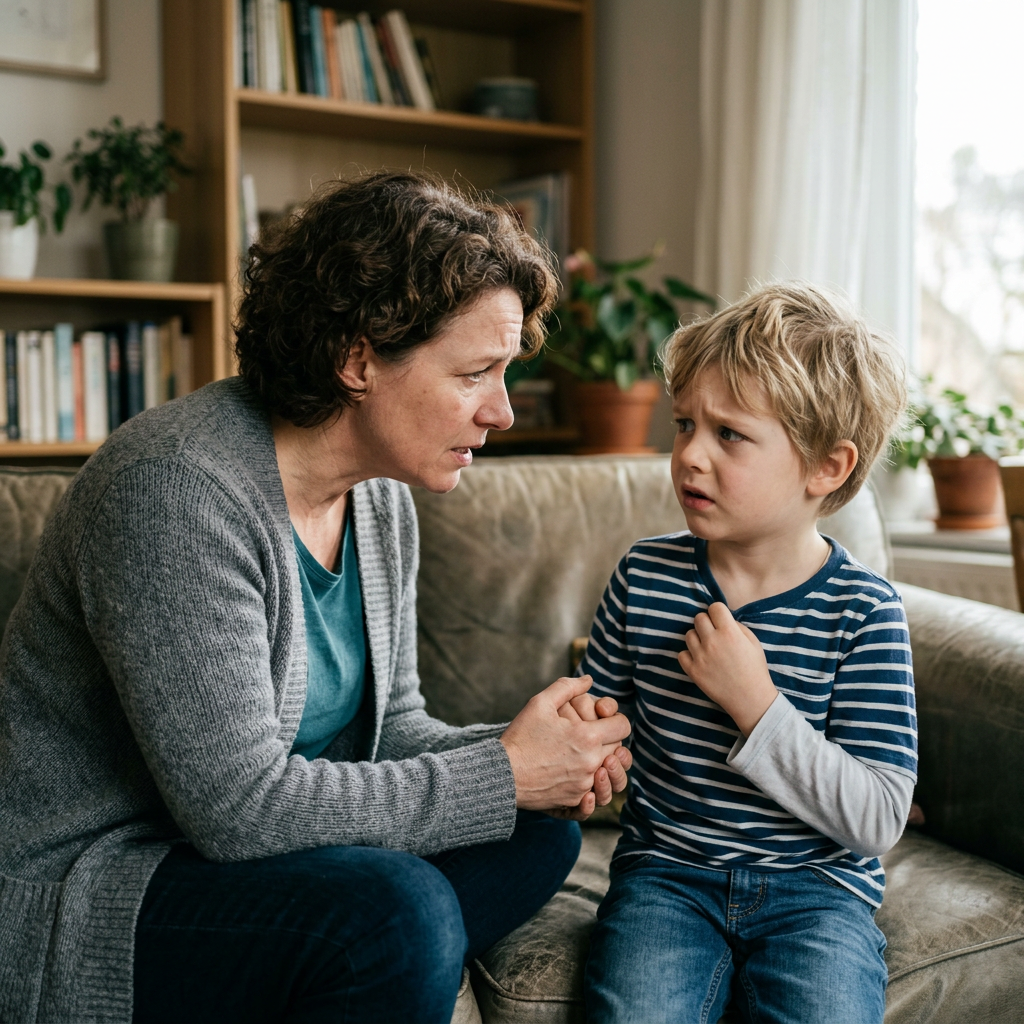
Talking to children about death is one of the hardest things a parent or caregiver can do. But children are more capable of understanding than we often give them credit for — and honest, gentle conversations help them feel safe and included rather than confused and left out. You do not need to have all the answers. You just need to be present, honest, and willing to sit with their feelings alongside your own.
Use clear, honest language
Use the words died and death. Avoid phrases like “passed away,” “gone to sleep,” “lost,” or “gone to a better place” — these can confuse younger children and create anxiety. A child told that Grandpa “went to sleep” may become afraid of going to sleep themselves.
A simple, honest explanation might sound like: “Nana died. That means her body stopped working completely and she won’t be coming back. It’s okay to feel sad about that. I feel sad too.”
Answer questions honestly
Children often ask very direct questions — what happens to the body, will you die too, did it hurt, where did they go. Answer simply and honestly, at an age-appropriate level. It is okay to say “I don’t know.” It is okay to say “different people believe different things about that.” It is okay to cry in front of them.
Seeing adults grieve teaches children something important: that grief is a normal, safe response to loss. If adults pretend to be fine, children may conclude that there is something wrong with their own sadness, or that grief is something to be hidden.
What to expect by age
- Under 5: May not understand that death is permanent. Need simple, repeated explanations, physical comfort, and maintained routines. May ask the same questions many times as they try to understand.
- Ages 5–8: Beginning to understand that death is permanent. May worry they caused the death through a thought, a wish, or an argument. Reassure them clearly and directly: “This was not your fault. Nothing you did or thought made this happen.”
- Ages 9–12: Understand death more fully and may have questions about the biological and practical aspects. May try to appear strong or to protect grieving adults. Acknowledge their feelings without forcing them to express them.
- Teenagers: May grieve intensely but privately, pulling away from family and processing through peers or alone. Give them space while staying available and present. Be alert to signs of prolonged withdrawal, declining school performance, or any mention of not wanting to be alive.
What children need most
- Honest, age-appropriate information about what happened
- Permission to ask questions and feel their feelings — all of them
- Normal routines maintained where possible — school, mealtimes, bedtimes
- Permission to say the name of the person who died and to talk about them
- Space to play and be children — this is healthy, not disrespectful
- Adults who are not pretending everything is fine, but who are also not falling apart in ways that frighten them
- Reassurance that the people who care for them are still there and are not going to disappear
Including children in rituals and farewells
Where appropriate, allowing children to be part of the farewell — a funeral, a tangi, a small ceremony at home — can help them understand that the death is real and give them a chance to say goodbye. Many children who are excluded from these events later feel upset at having been left out.
Prepare children in advance for what they will see and experience. Explain what a funeral is, what the space will look like, that people will cry, and that it is okay if they feel sad or scared. Give them a way to opt out if it feels too much — and let them make the choice. Children who choose to attend tend to cope better than those who are simply excluded.
Notifying school
If your child has experienced a significant loss, let their school know as soon as possible. A brief note or conversation with the class teacher allows the school to be aware of what the child is going through, to watch for signs of distress, and to make accommodations if needed. Most NZ primary and secondary schools have access to a school counsellor or guidance counsellor who can provide additional support.
You might say something like: “[Child’s name] has recently experienced the death of [person]. They may be finding school difficult at the moment and I wanted you to be aware. Please let me know if you notice anything I should know about.”
Grief in te ao Māori — tamariki and whānau
In te ao Māori, tamariki (children) are typically included in tangi and in the rituals of farewell. The tangi is a communal, intergenerational gathering in which children participate alongside adults. Death and loss are not hidden from children — they are part of the shared experience of whānau. This inclusion can provide tamariki with a clear understanding of what has happened, as well as the comfort of being held within a wider community.
If you are supporting Māori tamariki through grief, follow the lead of their whānau and kaitiaki about how they want to involve the children, and what traditions and practices they wish to observe.
When to get extra support
Some signs that a child may need additional support beyond what family and school can offer:
- Prolonged withdrawal from friends and activities they previously enjoyed
- Significant decline in school performance or attendance
- Ongoing sleep problems, nightmares, or physical complaints without medical cause
- Very intense or prolonged guilt
- Any statement about wanting to die, wanting to join the person who died, or not wanting to be here
If you are concerned, start with your child’s GP or the school counsellor. Skylight (0800 299 100) specialises in grief, loss, and trauma support for children and young people across Aotearoa. Youthline (0800 376 633 or text 234) is available for teenagers who may prefer to reach out themselves.
Support for children and families in New Zealand
- Skylight — 0800 299 100 — grief and trauma support specialising in children, young people and families
- Youthline — 0800 376 633 or text 234 — free support for young people
- The Grief Centre — 0800 331 333 — counselling and support groups for all ages
- 1737 — free call or text, 24/7 — for parents, caregivers, and young people
- Your child’s GP or school counsellor — first points of contact for additional support
- Find local grief support near you — regional directory for Aotearoa
Related guides
How to Support a Grieving Friend →Grief After a Death →When Grief Feels Overwhelming →Browse all guides →Need support right now?
Free 24/7 support is available across New Zealand.
If this helped you, you’re welcome to share it with someone who may need it.
You can also join the Grief Support NZ Facebook group to connect with others across New Zealand.
Support this free resource
Grief Support NZ is free for anyone who needs it. If you’d like to help cover costs, you can make a small voluntary contribution.
Support Grief Support NZThis article is intended as general support and information only. It is not a replacement for professional advice, counselling, or urgent help. If you feel unsafe, overwhelmed, or at risk, please contact emergency services or a crisis support service immediately.