
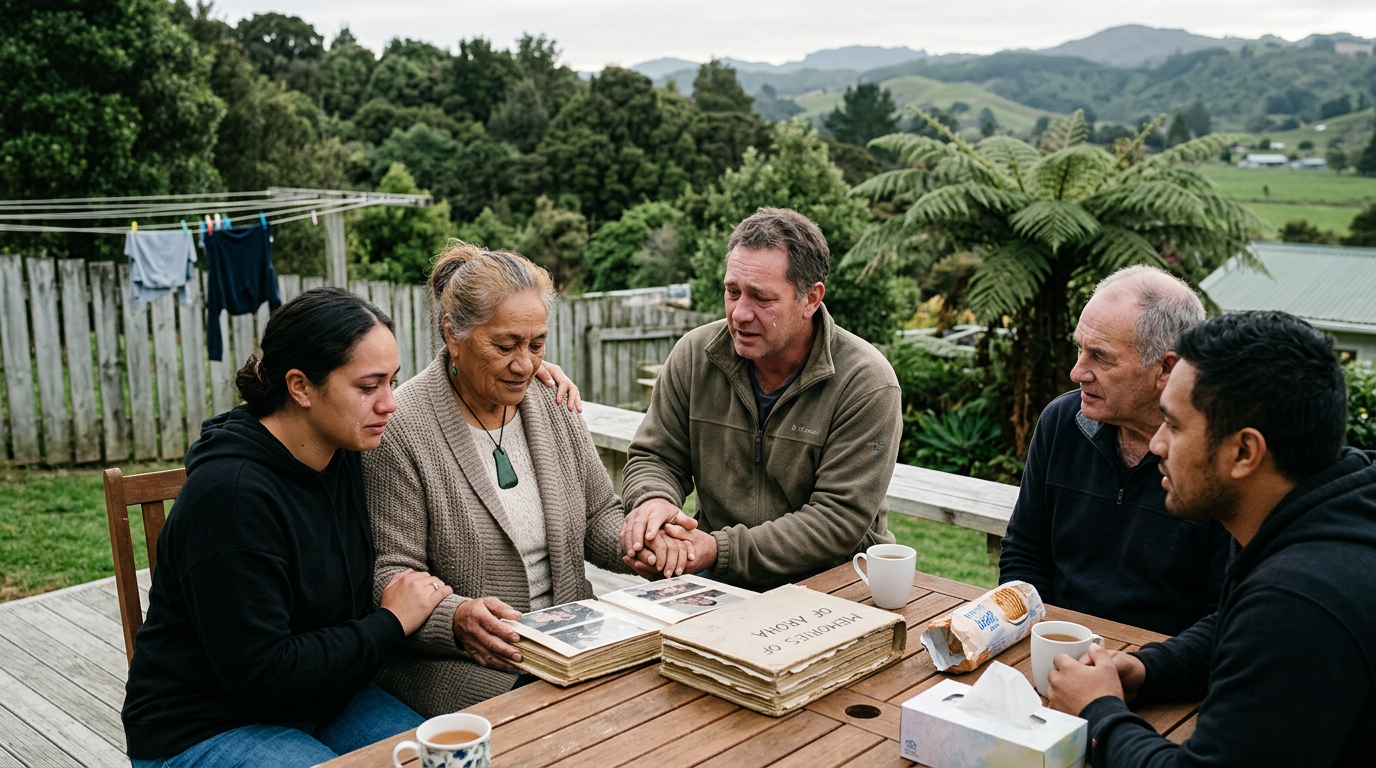
One of the simplest and most powerful things you can do for someone who is grieving is say the name of the person who died. Many people avoid it, afraid of causing pain. But for the person grieving, hearing that name said out loud — by someone else, casually and warmly — can be a profound relief.
This guide is for anyone who wants to keep the memory of someone alive, or who wants to support a grieving person but is not sure how to bring the person up naturally.
Why people avoid saying the name
Most people who avoid mentioning the person who died are doing it out of kindness. They do not want to remind the grieving person of their loss, or cause them to cry. What they may not realise is that the grieving person is already thinking about that person constantly. They are not forgetting. The silence does not protect them from pain. It just makes them feel more alone in it.
When people stop saying the name, stop sharing memories, and stop asking about the person who died, it can feel to the grieving person as though the world has already moved on and begun to forget someone they loved. That can be one of the most isolating parts of grief.
Why saying someone’s name matters
Grieving people often carry a quiet fear that the person they loved will be forgotten. When a friend or whānau member says the name unprompted, it tells the grieving person something important: I still think about them too. They still exist in my world.
It also gives the grieving person permission to speak — to respond, to share a memory, to cry if they need to, or simply to feel that it is safe to talk about the person they lost. Many grieving people hold back from bringing up the person who died because they worry it will make others uncomfortable. When you say the name first, you take that burden off them.
How to bring someone up naturally
You do not need a formal occasion or a prepared speech. Mentioning someone who has died can be woven into ordinary conversation. Some examples:
- “I was driving past [place] today and thought of [name].”
- “I was telling someone about [name] the other day — that story about [—]”
- “[Name] would have loved this.”
- “I still think about [name] a lot. I miss them.”
- “Something reminded me of [name] this week and I wanted to mention it.”
None of these require the other person to respond in any particular way. They are openings, not demands. The grieving person can walk through the door or not — and either way, they know the door is there.
Sharing memories
If you knew the person who died, sharing a specific memory is one of the most meaningful things you can offer. A detail only you know, or a moment that captures something true about the person, tells the grieving person that their loved one existed fully in the world — not just in their own private memory.
It does not need to be a grand story. Small ones matter just as much:
- “I always remember how he laughed at his own jokes before he got to the punchline.”
- “She always remembered everyone’s birthday. I think of her every time mine comes around.”
- “He had this way of making you feel like you were the most interesting person in the room.”
- “I have a photo of her I love — would you like a copy?”
If you did not know the person who died, you can still invite memories by asking: “Tell me about them.” Or: “What do you miss most?” These questions invite the grieving person to share without pressure or obligation.
What to do if someone cries
Sit with it. You do not need to fix it, change the subject, or rush to reassure. Crying is not a sign that you said the wrong thing — it is often a sign of relief. Something that has been held in has been given permission to come out.
You do not need to speak. Staying present — handing over a tissue, a hand on a shoulder if that feels right, simply not leaving — is enough. After a moment, you might say quietly: “I’m glad we can talk about them.”
Keeping the person alive in conversation over time
In the early weeks after a death, people often speak of the person freely. Over time those mentions taper off — not out of forgetfulness but because people become unsure whether it is still welcome. If you knew the person who died, keeping them present in conversation over months and years is one of the quietest and most generous acts of support you can offer.
Say their name on their birthday. Mention them when something happens that they would have appreciated. Tell the story again, even if you have told it before. Let the grieving person know that you have not forgotten either.
Language and te ao Māori
In Aotearoa, many whānau refer to the person who has died as their tüpuna (ancestor) or simply by name. In te ao Māori, the connection between the living and the dead is ongoing — the person who has died remains part of the whānau and the community. Speaking of them, telling their stories, and keeping their presence alive is not just acceptable but expected and important.
At a tangi, people speak directly to the tüpuna. In everyday life, the same principle applies: the person who died is still part of the story. Using their name and including them in conversation honours that relationship and supports the people they left behind.
Respecting different grief styles
Some people want to talk about the person who died constantly — to tell stories, revisit memories, and keep them present in every conversation. Others find it very hard, at least for a time. Follow the lead of the grieving person. Offer the opening, then let them choose whether to walk through it. If they change the subject, that is okay. Try again another time. The important thing is that they know you are not afraid to talk about it.
On anniversaries and milestones
Birthdays, the anniversary of the death, Christmas, Matariki, a graduation, a new baby — these are moments when the absence of the person who died is felt most sharply. Reaching out on these dates, naming the person who died, means a great deal. Something simple is enough:
“I’m thinking of you and [name] today. I hope today is kind to you.”
That sentence takes thirty seconds to send. Its effect can last much longer.
Support available in New Zealand
If supporting a grieving person is affecting your own wellbeing, or if you are grieving yourself, these services can help:
- 1737 — free call or text, 24/7, trained counsellors
- The Grief Centre — 0800 331 333 — bereavement counselling and support groups across NZ
- Skylight — 0800 299 100 — grief and trauma support for all ages
- Lifeline Aotearoa — 0800 543 354 — free, 24/7
- Where to find grief support near you — regional directory for Aotearoa
Related guides
What to Say to Someone Who Is Grieving → What Not to Say to Someone Who Is Grieving → How to Support a Grieving Friend → Supporting Someone on Anniversaries and Hard Dates → Browse all guides →Need support right now?
Free 24/7 support is available across New Zealand.
If this helped you, you’re welcome to share it with someone who may need it.
You can also join the Grief Support NZ Facebook group to connect with others across New Zealand.
Support this free resource
Grief Support NZ is free for anyone who needs it. If you’d like to help cover website costs, resource updates, and future tools, you can make a small voluntary contribution. There is no pressure at all.
Support Grief Support NZThis article is intended as general support and information only. It is not a replacement for professional advice, counselling, or urgent help. If you feel unsafe, overwhelmed, or at risk, please contact emergency services or a crisis support service immediately.