
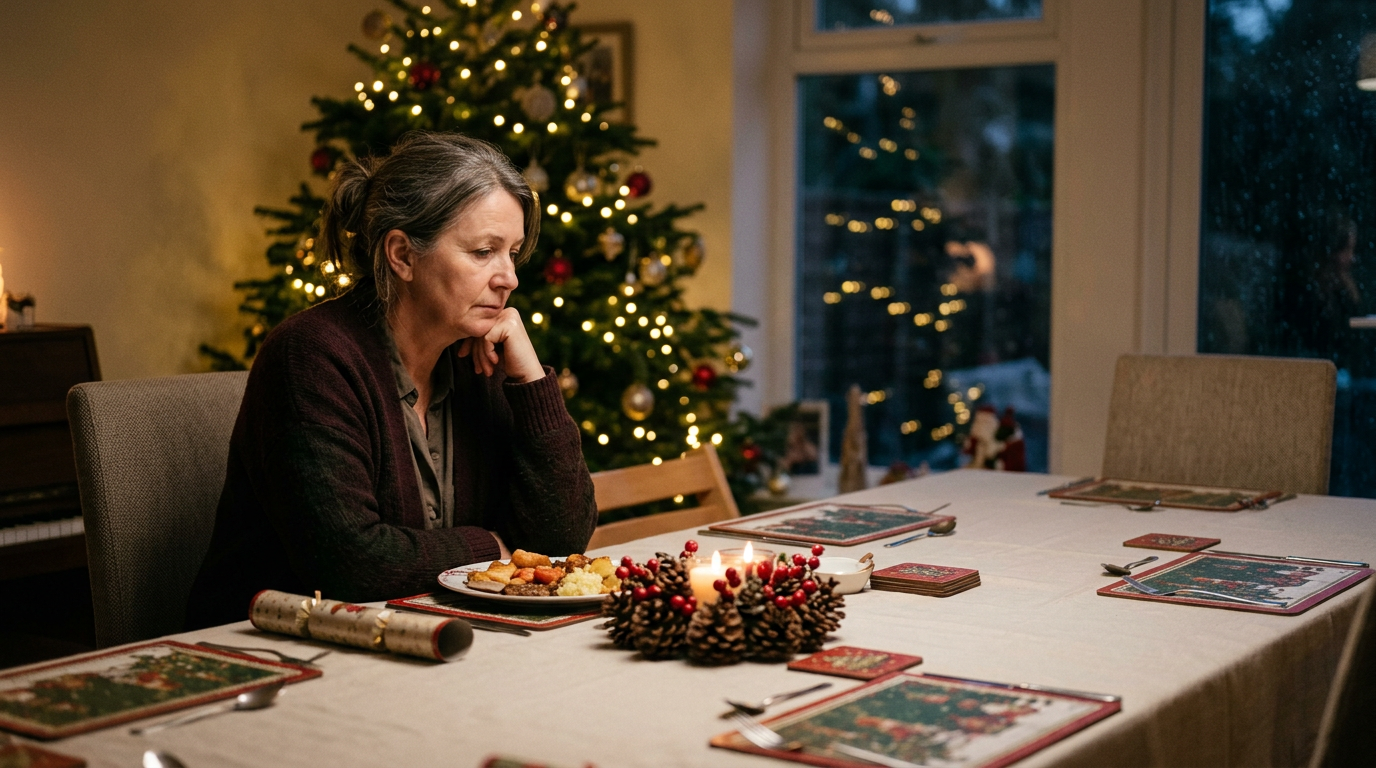
The first Christmas, the first birthday, the first anniversary without someone — these dates arrive whether we are ready for them or not. They can bring grief rushing back in a way that feels as raw as the early days. You do not have to pretend these days are fine.
This article is for anyone navigating a significant date in grief — whether it is approaching, whether you are in it right now, or whether it has just passed and you are trying to make sense of how it felt.
Why special dates hit so hard
Significant dates carry a particular weight in grief because they are tied to rituals and expectations. They are dates that used to involve the person who died. A birthday that used to mean a phone call, a celebration, a shared meal. A Christmas that was built around their presence. The day itself arrives and the absence is not abstract — it is specific, concrete, and visible.
There is often social pressure to be joyful — at Christmas especially — which can make grief feel more lonely and more wrong than usual. Everyone else appears to be celebrating, and the contrast can be painful. Many people find that the anticipation of these dates — the weeks leading up to them — is harder than the day itself.
Christmas in New Zealand
In Aotearoa, Christmas falls in the middle of summer — which adds its own texture to grief at this time of year. The long, bright days, the gatherings, the beach trips and barbecues that are supposed to feel festive can feel relentless when you are carrying loss. The lightness in the air can make your own heaviness feel more conspicuous.
You are allowed to find it hard. You are allowed to opt out of things that are too much. You are allowed to have a quiet day, or a day that looks very different from usual. Summer sun does not require you to be okay.
If you are dreading a hard date
The anticipation of a hard date can be its own kind of grief. Weeks of dread, of counting down to something you do not want to arrive, of watching the date approach on the calendar with a sense of impending pain. Some things that may help with the lead-up:
- Acknowledge that it is going to be hard. Not telling yourself it will be fine — but letting yourself know that it is okay for it to be difficult, and that you will get through it.
- Decide in advance, where possible, how you want to spend the day. Having even a loose plan can give you a sense of agency over something that can otherwise feel like it is happening to you.
- Tell someone that you are finding the lead-up hard. Being witnessed in the anticipation matters too.
- Lower your expectations of yourself. The goal is to get through it, not to manage it gracefully or perform wellbeing for anyone else.
Getting through the day itself
There is no correct way to spend a hard date. Some possibilities that others have found helpful:
- Do something that connects you to the person who died. Visit a place they loved. Cook something they loved. Look through photos. Write them a letter. Light a candle for them.
- Change the day if you need to. You do not have to spend Christmas the same way as before. It is completely valid to scale back, to travel somewhere different, to spend the day differently, or to simply mark it quietly at home.
- Spend it with the right people. People who will say the person’s name. People who will not expect you to perform okay-ness. People who are comfortable with silence or tears.
- Spend it alone, if that is what you need. Not everyone wants company. Solitude with the grief is sometimes exactly right.
- Give yourself permission to feel whatever comes. Relief, sadness, unexpected laughter, flatness, anger, love — all of it is allowed.
- Move through the day in small pieces. One hour at a time. One meal at a time. You do not need to plan beyond the next step.
If you are alone at Christmas
Grief can coincide with physical isolation — especially for those who have lost a partner, or whose family lives far away, or who live alone. Being alone at Christmas when you are grieving can feel particularly heavy.
If you are facing Christmas alone, some thoughts: you are not obligated to make the day meaningful. Surviving it is enough. If you want company, reach out — to a friend, a neighbour, a church community, or the Grief Support NZ Facebook group. If you need to talk to someone, call or text 1737. They are available on Christmas Day.
Creating new rituals
Some people find that creating a small ritual for hard dates — something that acknowledges the person who died without trying to replace the old way of marking the day — helps the date feel more bearable and more meaningful.
Some examples:
- Setting a place at the table for them, or raising a glass in their name
- Visiting a place they loved on their birthday
- Making a donation to a cause they cared about on the anniversary of their death
- Planting something, or releasing something, that marks the occasion
- Gathering with a small group of people who loved them and sharing memories
- Writing in a journal to them on significant dates
There is no pressure to create a ritual. But if the idea of a small, intentional acknowledgement feels right, it is worth exploring.
For people supporting someone on a hard date
Reach out. Send a message on the day. Say the name of the person who died. A simple, specific message means a great deal — far more than silence, even well-intentioned silence.
Some examples: “I know today is a hard one. I’m thinking of you and [name].” Or: “No need to reply. I just wanted you to know I remember [name] today too.”
Ask if they want company or if they would rather be alone. Offer something specific if you can — a meal, a visit, a walk. And if they say they want space, respect it without disappearing entirely.
After the day passes
The day after a hard date can feel strangely flat or deeply depleted. The weight of getting through it can leave a person exhausted. There may also be a kind of grief in the aftermath — the date that was dreaded is over, and there is a mix of relief and a new kind of loss.
Be gentle with yourself in the days that follow. Rest. Lower your expectations. And if someone checks in — let them.
Matariki — a time of remembrance
Matariki, the Māori New Year marked by the rising of the Matariki star cluster, is a time of remembrance for those who have died, as well as a time of renewal and celebration. It is a public holiday in Aotearoa (falling in June or July), and for many whānau it is a meaningful occasion to acknowledge grief, to honour those who have died, and to hold them present in the gathering of the living.
If you are Māori or connected to Māori tikanga, Matariki may offer a culturally grounded way to acknowledge a loss and to be in community with others who are also remembering.
Support available in New Zealand
If you are struggling around a hard date, these services are available:
- 1737 — free call or text, 24/7 including public holidays — trained counsellors
- The Grief Centre — 0800 331 333 — bereavement counselling and support groups
- Skylight — 0800 299 100 — grief and trauma support for all ages
- Samaritans NZ — 0800 726 666 — confidential listening, 24/7
- Lifeline Aotearoa — 0800 543 354 — free, 24/7
- Find local grief support near you — regional directory for Aotearoa
Related guides
Coping With Anniversaries, Birthdays, and Special Dates →Supporting Someone on Anniversaries and Hard Dates →When Grief Feels Overwhelming →Grief After a Death →Browse all guides →Need support right now?
Free 24/7 support is available across New Zealand.
If this helped you, you’re welcome to share it with someone who may need it.
You can also join the Grief Support NZ Facebook group to connect with others across New Zealand.
Support this free resource
Grief Support NZ is free for anyone who needs it. If you’d like to help cover website costs, resource updates, and future tools, you can make a small voluntary contribution. There is no pressure at all.
Support Grief Support NZThis article is intended as general support and information only. It is not a replacement for professional advice, counselling, or urgent help. If you feel unsafe, overwhelmed, or at risk, please contact emergency services or a crisis support service immediately.